AI & Computer Vision · April—May 2026
AI Waste
Classification
A real-time computer vision application designed to classify nine types of waste from a live camera feed.
View the full project report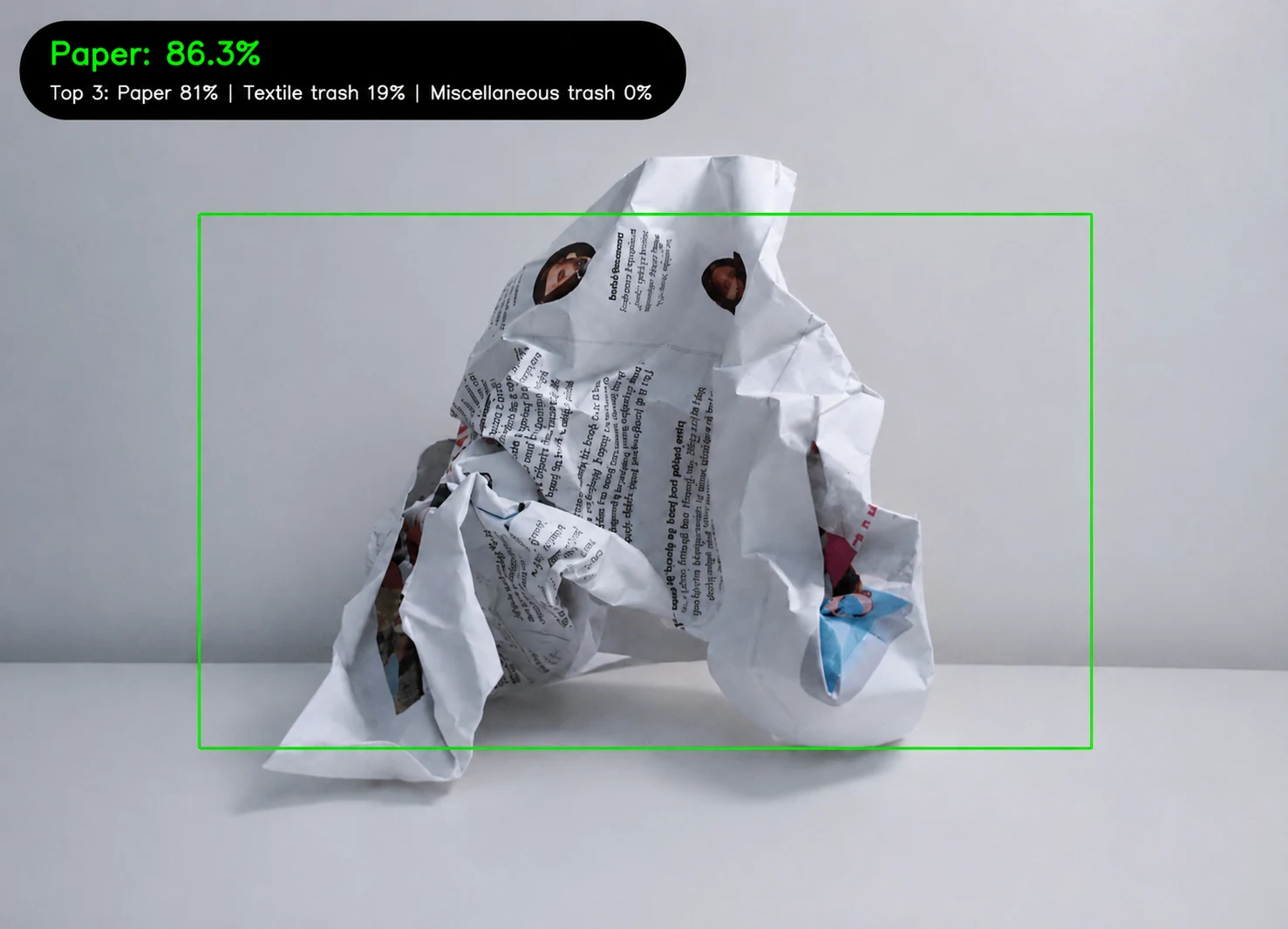
From dataset preparation to a live camera test.
The project combined dataset preparation, transfer learning, model comparison and live deployment. The goal was not simply to train a model, but to understand how it behaved when moved from controlled test images to a real camera.
The challenge
A useful waste classifier must cope with changing lighting, backgrounds and camera angles. That meant keeping test data separate, comparing architectures and examining limitations during live use instead of relying on a single training score.
How it worked
-
01
Prepare the dataset
Organised 4,752 images into fixed training, validation and held-out test workflows.
-
02
Train and compare
Fine-tuned MobileNetV2 and trained ResNet18 as a comparison architecture.
-
03
Test honestly
Evaluated the models on 713 unseen images and reviewed classification behaviour.
-
04
Deploy live
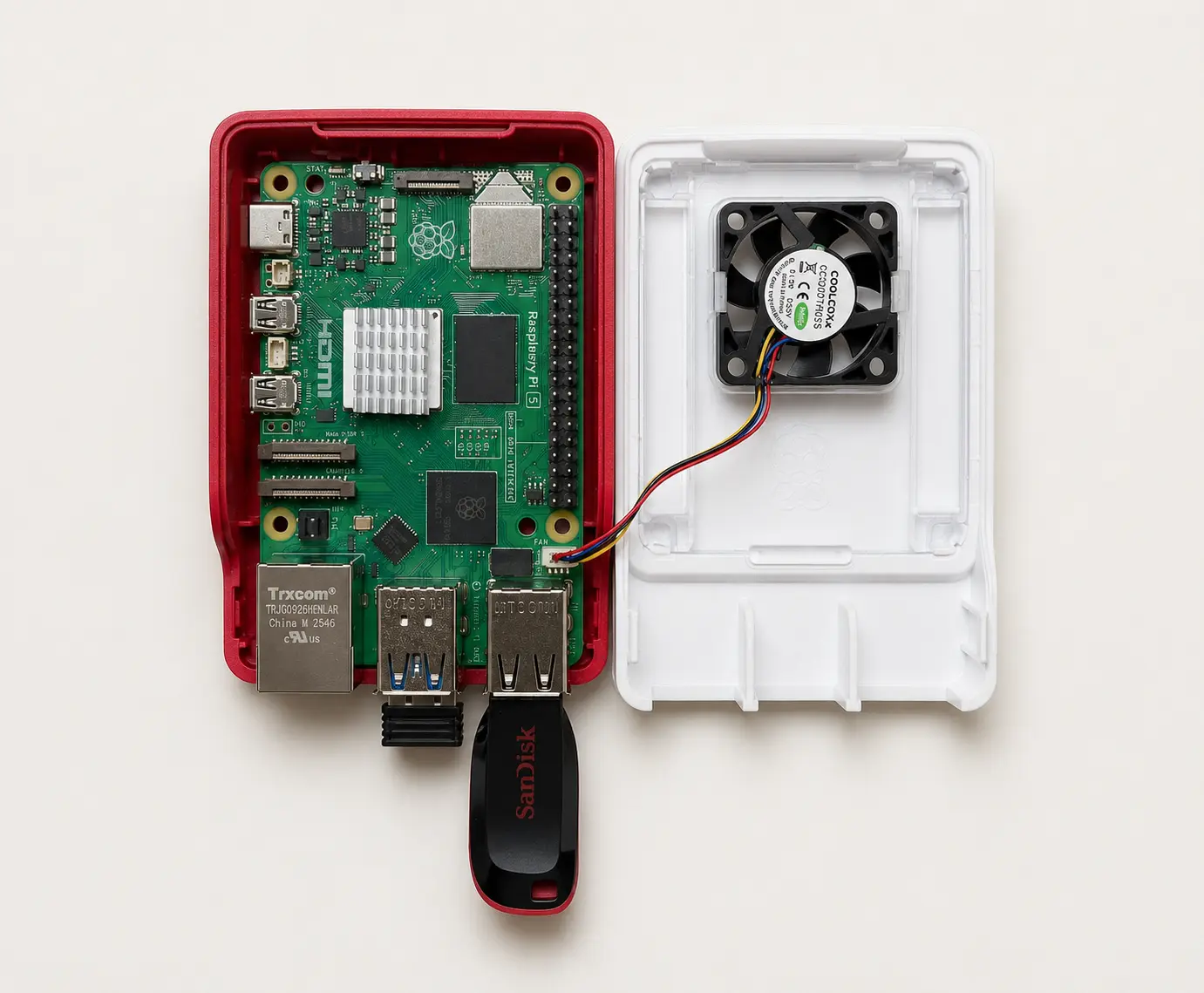
Built an OpenCV webcam demonstration and tested CPU performance on Raspberry Pi 5.
Project in action
Real outputs. Real hardware.
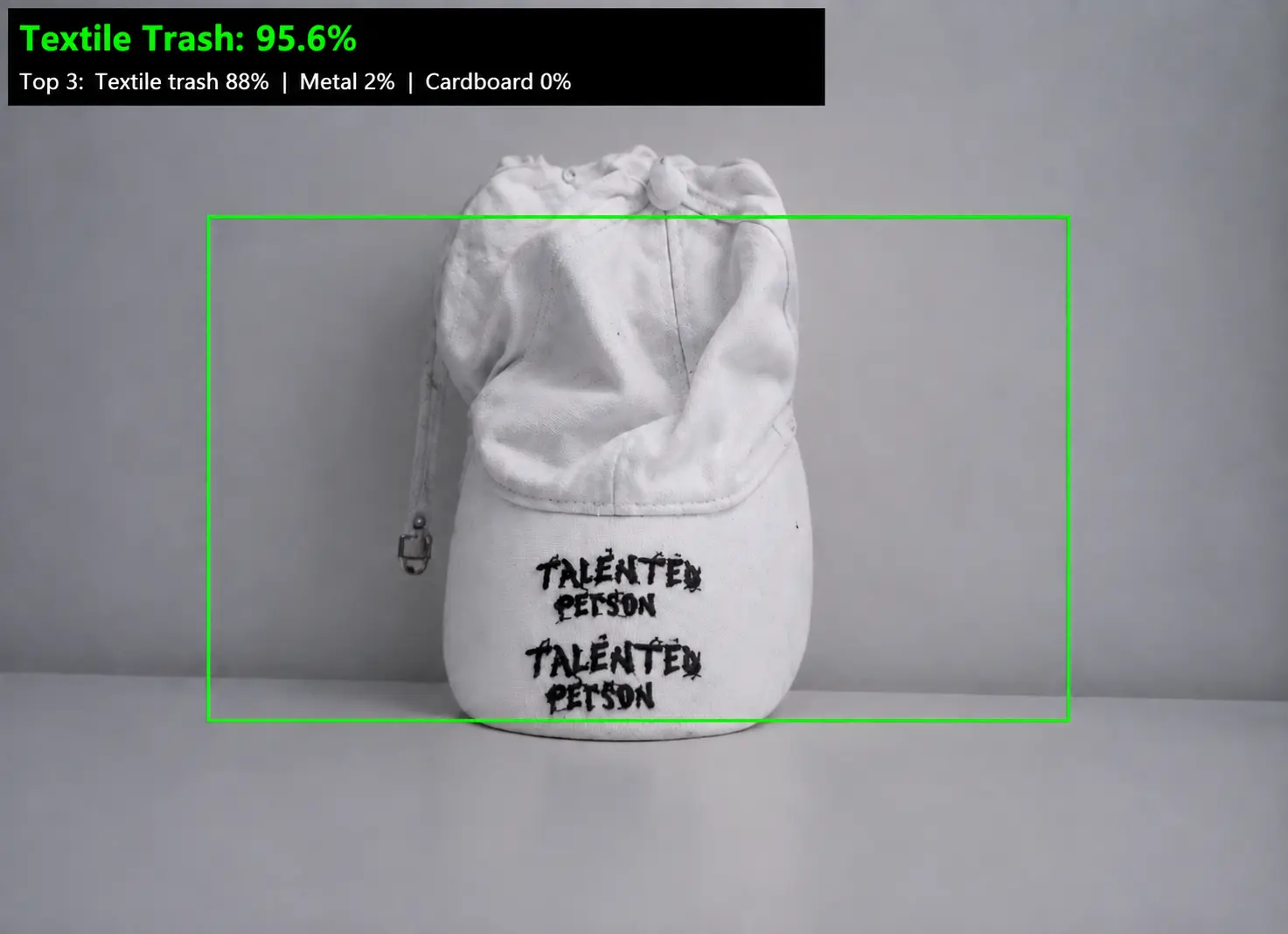
These are the actual classifier results and edge device used in the project.
Outcome
640 of 713 unseen test images classified correctly.
What I learned
Test accuracy and real-world behaviour are related but not identical. Deployment exposed lighting, angle and background factors that were less visible in the controlled dataset.
Technology used
Watch the project demo ↗Next case study
AWS Cloud Architecture →